


What Nairobi taught us about biophilia in Africa
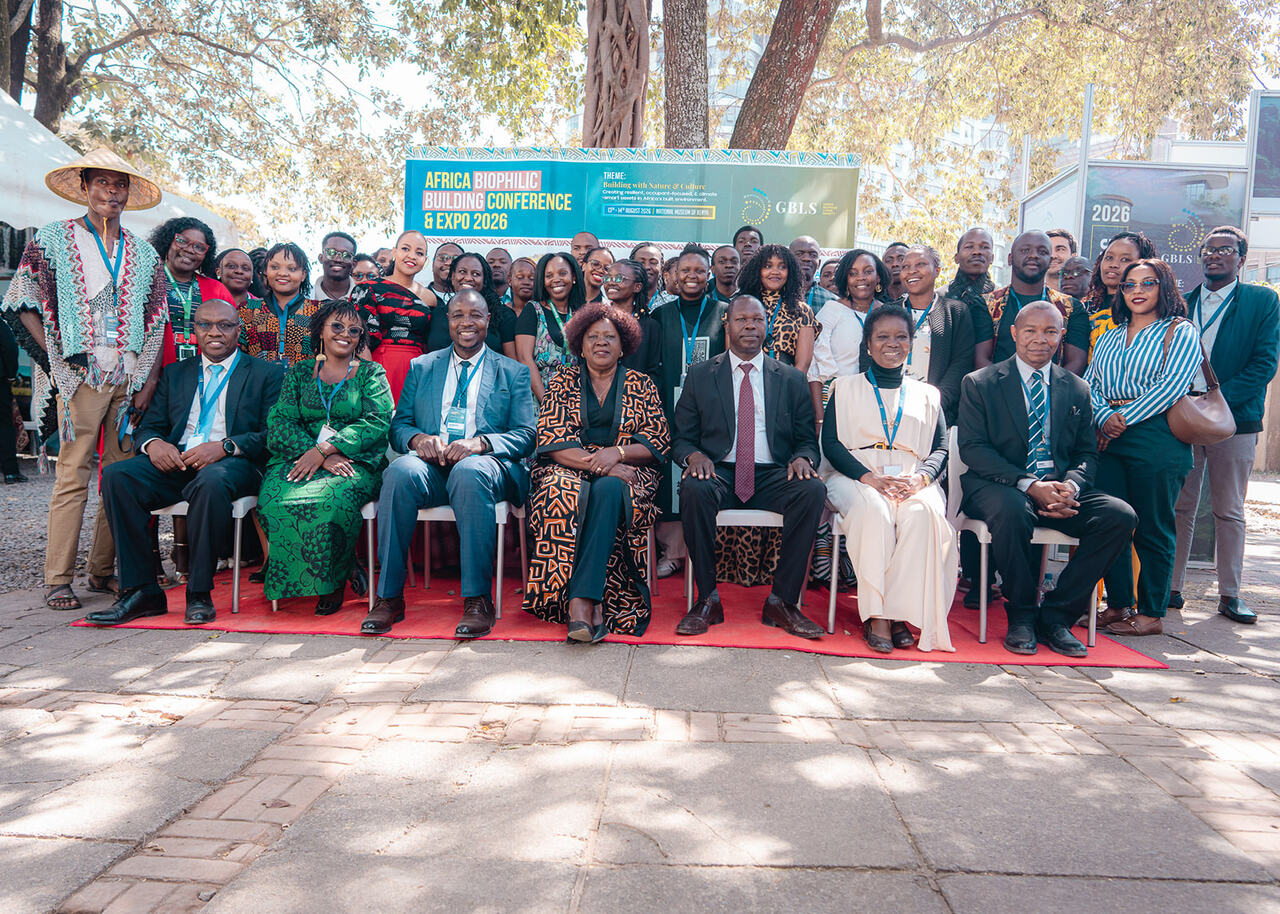
The Africa Biophilic Building Conference & Expo was hosted by the Green Biophilic Living Society on August 13–14 at the National Museums of Kenya in Nairobi.
7A walk in the garden
Between sessions at the National Museums of Kenya, a few of us slipped out and stepped into the cool embrace of the museum gardens. The air grew noticeably crisper beneath the leafy canopy, the persistent hum of Nairobi traffic gently drifted away, and for a few restorative minutes, nobody was debating points, minimum benchmarks, or certification submission deadlines. We were simply savouring what it feels like to be immersed in a truly well-designed, nature-connected place.
That brief stroll spoke far more eloquently about biophilic design than hundreds of slide decks ever could. In our bones, we instinctively know when a space feels right. The far more urgent, compelling question is why our industry so rarely designs for that feeling first.
Across our continent, this question couldn’t be more pressing. Kenyan urban centres are already grappling with rising temperatures, air pollution, severe flooding, and the rapid depletion of natural green pockets. Because African cities are expanding at a breathtaking pace, the vast majority of buildings that will shape daily human life for generations to come haven’t even been drawn yet.
Two days, one big conversation
In August 2026, Marloes Reinink and Khosi Mthethwa travelled to Kenya for the Africa Biophilic Building Conference & Expo. There, they teamed up with our brilliant local East African colleagues, Vanessa Mbithe and Sidney Njau.
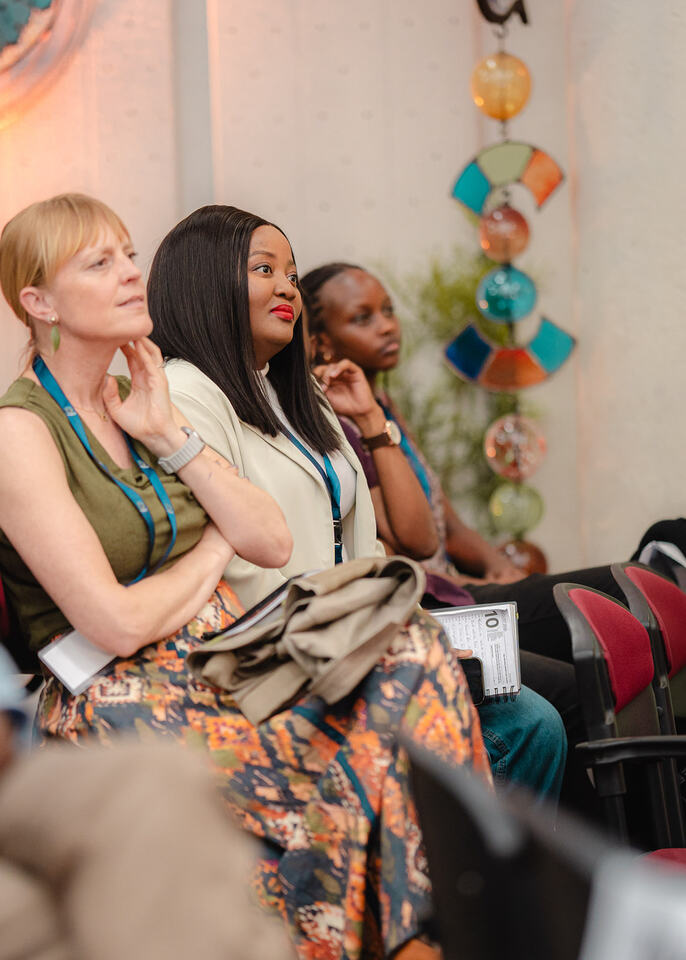
Framed by the evocative theme “Building with Nature and Culture: Creating resilient, occupant-focused, and climate-smart assets in Africa’s built environment”, the summit convened architects, developers, urban planners, policymakers, and green finance pioneers for dynamic panel sessions, guided dialogue, and immersive biophilic experiences.
The venue itself set a vibrant tone. A museum nestled within historic botanical gardens provided the ideal setting to explore reconnecting architecture with the natural world, giving the entire gathering a deeply grounded, unhurried feel.

On the panel: where policy fits in
When it came to panel discussions, spontaneous shifts in the schedule only enriched the exchange.
During the fireside chat on Regulation, Policy & the Future of Nature-Centred Development, Marloes Reinink took the stage alongside industry voices like Kennedy Matheka, Nashon Okowa, George Irwin, and Arch. Nickson Otieno. The core message hit home: voluntary rating systems have done incredible work, but if we want nature woven into our cities at true scale, biophilia must show up directly in planning codes, building regulations, and public procurement rules. Governments must lead by example in public infrastructure, rewarding real-world human experience rather than administrative paperwork.
Meanwhile, Khosi Mthethwa represented Solid Green on Panel 3: Nature as a Competitive Advantage, moderated by Roy Githaiga alongside Erick Nyadimo (President, Institute of Surveyors of Kenya), Plan. Mairura Omwenga (Chairman, Town and County Planners Association of Kenya), and Elizabeth Loker (Founder of Olepangi Farm). Together, they unpacked how nature-integrated developments consistently outperform traditional real estate; driving higher occupant well-being, asset desirability, and long-term financial resilience.
People, nature, and buildings
Beneath the technical design dialogue ran a deeply human current.
Architect and researcher Wangui Mwangi pointed out that Kenya’s next frontier in public health might be quietly unfolding inside its buildings, within sealed office blocks, poorly ventilated classrooms, and homes where cooking smoke lingers. Considering we spend nearly 90 percent of our lives indoors, the conference dedicated an entire track to designing for health, healing, and holistic well-being.
For those of us navigating rating tools every day, daylight, indoor air quality, thermal balance, and acoustic comfort are familiar metrics in frameworks like Green Star, LEED, and WELL. What Nairobi powerfully reignited was the truth that people don’t experience buildings as line items on a compliance checklist. They experience them emotionally and physically, as environments that either restore or exhaust them. Biophilic design provides the soulful vocabulary for that experience, reaching far beyond minimum credit thresholds.
Back to our roots
What felt most inspiring was the sheer passion in the room. High-profile industry leaders gathered not to chase points or plaques, but to rediscover the fundamental soul of good architecture.
In South Africa, green building practice has matured around rigorous certification. That focus has built invaluable skills, elevated market standards, and provided clear targets. Yet occasionally, the rating target threatens to eclipse the primary vision.
Nairobi brought us back to essential truths: generous daylight, fresh air, open views, lush planting, natural shade, cooling water, and spaces that invite people to linger. None of this is novel, and none of it requires a scorecard to deliver value. Certification should always follow exceptional design, never substitute for it.
Just as profound was the celebration of culture and Indigenous Knowledge Systems (IKS). Discussions highlighted traditional African design wisdom, climate-responsive techniques, indigenous material palettes, and community-centric spatial principles. Viewed through this lens, biophilia is no imported trend; it is a conscious remembering of who we have always been.
Looking ahead: the concrete jungle question
Some of the most candid conversations addressed the urban reality right outside the museum doors. Recent tree fellings along Nairobi’s State House Road sparked public outcry, leading to the decision that no mature urban trees may be removed without explicit county approval. Meanwhile, neighbourhoods like Kilimani continue to transform into dense concrete corridors.
The data underscores what residents experience firsthand. A landmark Kenyatta University study published in August 2026 revealed that between 1985 and 2025, Kilimani’s built footprint expanded by roughly 25%, while green and open spaces shrank by 15%. On redeveloped plots, site coverage jumped from the traditional 35% planning benchmark to upwards of 90%. The study’s main takeaway is vital: density itself is not the villain but an uncoordinated, plot-by-plot redevelopment without a green masterplan is.
The resounding takeaway from these panels was a call for regulatory leadership. Unless green infrastructure is enshrined as a non-negotiable component of urban development, concrete sprawl will prevail. As GBLS convener Wangui Mwangi emphasised to the media, biophilic principles must be woven into national and municipal policy – a mission GBLS is driving through new pilot project partnerships and policy dialogues across East Africa.
Forward-thinking developments are already proving what alternative models look like:
- Green Heart Kilifi: A coastal master-planned town capping built structures at 30% while preserving 70% of its acreage for forests, agriculture, and open ecosystems.
- Herencia: A 100-acre community along the Thika Superhighway designed specifically as a microclimate buffer against urban heat islands.
- Olepangi Farm: Elizabeth Loker’s farm lodge in Timau at the foothills of Mount Kenya, crafted with biophilic expert Liz Calabrese, which has rejuvenated degraded soil and planted over 5,000 indigenous trees.
Preserving land on expansive master-planned sites is one thing; retrofitting dense, existing urban grids like Kilimani is the true test. That is where visionary regulations and dedicated sustainability consultants make all the difference. Incorporating nature, climate resilience, and local culture into evolving African building codes today is vastly easier than trying to repair concrete jungles tomorrow.
For Solid Green, the conference aligned with an exciting milestone: the opening of our Nairobi office at The View in Westlands. Overlooking lush canopy and a river corridor, our windows offer a daily reminder of what we are building toward. The event brought our South African and Kenyan teams together under one roof, forging regional ties with partners who share our conviction that the African built environment can lead global sustainability.
In their words
Khosi Mthethwa
What I will remember most about the conference is how the venue brought the relationship between nature, culture and well-being to life. I loved the artwork throughout the National Museums of Kenya, particularly the work by Kitengela Glass, which transforms waste into art in ways that create a real sense of wonder. The vibrant local market, showcasing clothing and artwork by local creatives, was another highlight. These experiences were a reminder that the places we create can do more than serve a function; they can inspire us, connect us to our culture and evoke a sense of belonging.
Walking the Peace Path labyrinth and spending time in the museum gardens offered a different kind of experience: one of calm and reconnection with nature. It brought to mind the principles underpinning the WELL Building Standard, particularly the importance of nurturing our connection with nature and creating spaces that support mental and emotional well-being.
On Panel 3, we explored nature as a competitive advantage, including how Nairobi’s building codes shape developers’ decisions, responses and perceptions of value. For me, the opportunity is to bring these conversations together: drawing on Africa’s rich cultural and indigenous knowledge while using evidence-based approaches to create buildings and places that deliver value in ways that extend beyond the financial. Ultimately, we should be creating environments that enrich the human experience, strengthen our connection to nature and reflect the cultures and communities they serve.
Because when we feel connected to the places we inhabit, we are more likely to feel a sense of responsibility for protecting them and caring for the well-being of those around us. In this way, nurturing our connection with nature can benefit not only our own well-being, but also the environments and communities of which we are a part.
Vanessa Mbithe
Living and working in Nairobi, I found the most important conversations were the ones about our own city. The trees cut down along State House Road, and Kilimani becoming a concrete jungle day by day, were part of the discussion. For those of us who work here, they are not abstract examples. They are the result of choices about how we plan and build.
So the question I have brought back to my own work is a simple one. What are we doing to make sure our green spaces are protected, and integrated into the dense neighbourhoods going up around us? What are we doing to be one with nature? We co-exist with nature, not separately from it. Protecting our Mother Earth has to be part of how we design and deliver buildings, not something we leave to someone else.
Sidney Njau
Nature as a competitive advantage was a key takeaway from this conference. Speaker Thomas Omo described how nature healed him and led him back to his passion and drive, and it resonated as a shared human experience. It reminded me that the greatest value of green building is often left on the table.
Our certified projects are important milestones, and this is an extension of that work. Buildings set the scene for the lives of their occupants, and biophilic spaces support people. Supported people are more resilient, productive and present, and that shows up as a return on investment in retention, wellbeing and performance.
The Edge in Amsterdam shows this is a disciplined investment, not a sentimental one. Its developers committed 12% of the total budget to bringing nature in through materials, daylight, smart air systems and indoor and outdoor landscaping, within an anchor tenant’s mandate of a payback period under ten years or nothing. The project was certified under BREEAM, but WELL and LEED also offer equally structured routes to implementing biophilic strategies and monitoring their performance after occupation.
Monitoring is where the social and governance case is made. Socially, biophilic design is a measurable investment in occupant health, comfort and engagement, the outcomes ESG social metrics require. In governance terms, a certified framework converts intent into targets, documented decisions and post-occupancy data that investors can audit, so human capital performance is measured and reported rather than assumed.
For developers, investors and financiers, this is a strategy for managing human capital that can be built into the certification they already pursue. For all of us, it is also a way back to a core part of our wellbeing, our connection to our planetary community.
What we brought home
We returned home energised by new partnerships across East Africa and a shared belief in our continent’s leadership potential. As Solid Green expands its footprint across the region, these collaborative relationships are invaluable.
Above all, Nairobi reconnected us to one of our key passions: helping shape environments that nurture human beings and restore the planet.
Designing for the feeling first
That quiet walk through the museum gardens remains our touchstone. No one needed a rating tool to know it was a place of restoration and balance. Our promise moving forward is to carry that spirit into every site we touch: start with how a space should feel, and let the rating follow.
A warm thank you to the Green Biophilic Living Society for hosting a transformative summit, and to every collaborator we met in Nairobi. Let’s keep building the future together.
To get a glimpse of East Africa’s construction landscape and the innovations shaping regional development, explore this Buildexpo Kenya Highlight Video. This video showcases regional trade momentum and building innovations in Nairobi, directly complementing the conference’s focus on East Africa’s rapidly growing built environment.

