


Resilient Cities Start with Resilient Communities
Here, Adrie Fourie, Head of the Sustainable Cities & Research Department at Solid Green, explores designing for dignity, cohesion, and climate adaptation from the ground up.
7Urban resilience is often framed in terms of infrastructure: roads that resist flooding, buildings that can withstand heatwaves, grids that keep running when disaster strikes. But in African cities, where social systems are as vulnerable as the physical ones, resilience must be defined more broadly.
True urban resilience starts not with concrete or carbon, but with communities. With people.
At Solid Green, we believe that sustainable cities are only as strong as the relationships, support systems, and lived experiences that hold them together. We’ve learned that you can’t design for cities unless you’re also designing with and for communities – their histories, hopes, needs and knowledge.
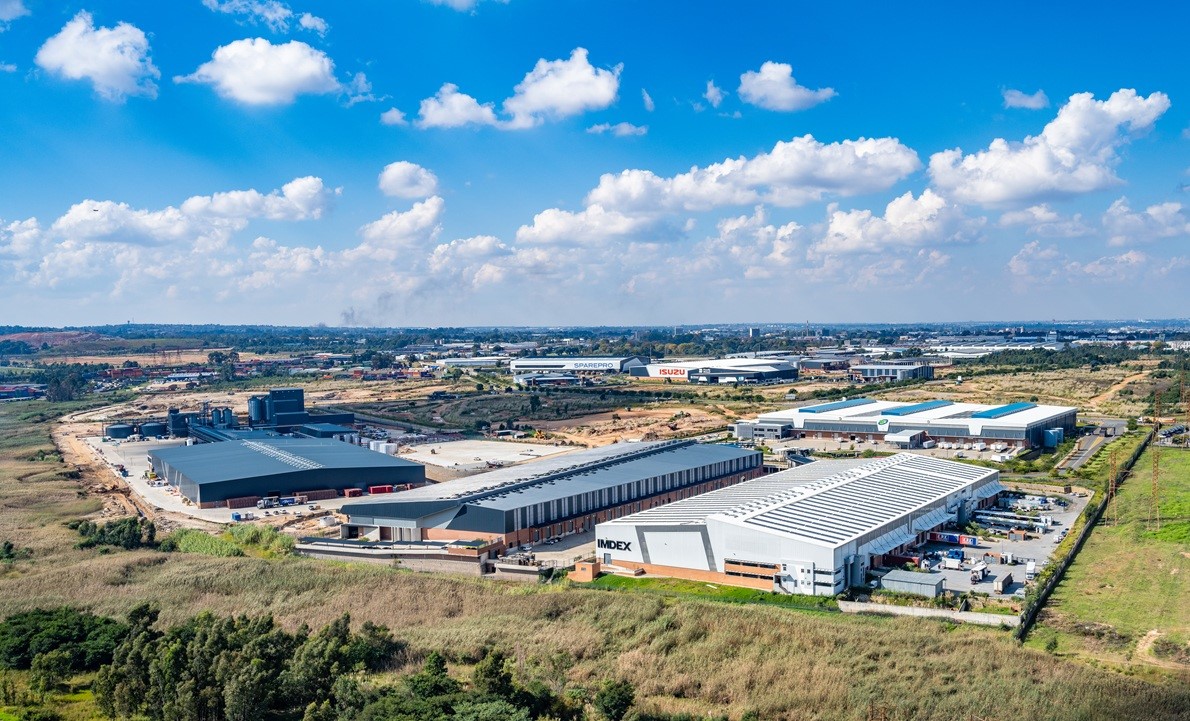
S&J Business Park: images courtesy of S&J Business Park
Urban Vulnerability is Social, Not Just Structural
Many of the risks faced by African cities – extreme weather, energy shocks, water scarcity, heat, displacement – are amplified by pre-existing inequalities. Informal settlements, for example, often exist on flood-prone land not by choice, but by exclusion. And when a crisis hits, it’s not only infrastructure that fails – it’s the absence of safety nets.
The most “vulnerable” populations are often the ones who have already endured generations of structural neglect.
Designing for resilience in this context requires more than engineering solutions. It requires emotional, cultural and economic intelligence.

Riverlands Precinct: images courtesy of Riverlands Precinct
From Healing-Centred Design to Collective Care
Resilient communities are not built overnight. They are cultivated through trust, dialogue, shared ownership, and design that respects context and culture. At Solid Green, we’re exploring how healing-centred and trauma-aware design approaches can enhance community engagement, especially in precinct-scale work.
Whether it’s through co-design sessions in informal communities or participatory planning in redevelopment precincts, we’ve seen that people respond to being included and genuinely listened to.
Design becomes an act of care when it:
- Supports safety and autonomy
- Reflects people’s realities, not just regulations
- Builds in places for connection, creativity, and calm
- Creates feedback loops between residents and decision-makers
In many of our projects, we’ve witnessed how these soft systems – trust, dignity, participation – are the glue that holds physical interventions together.
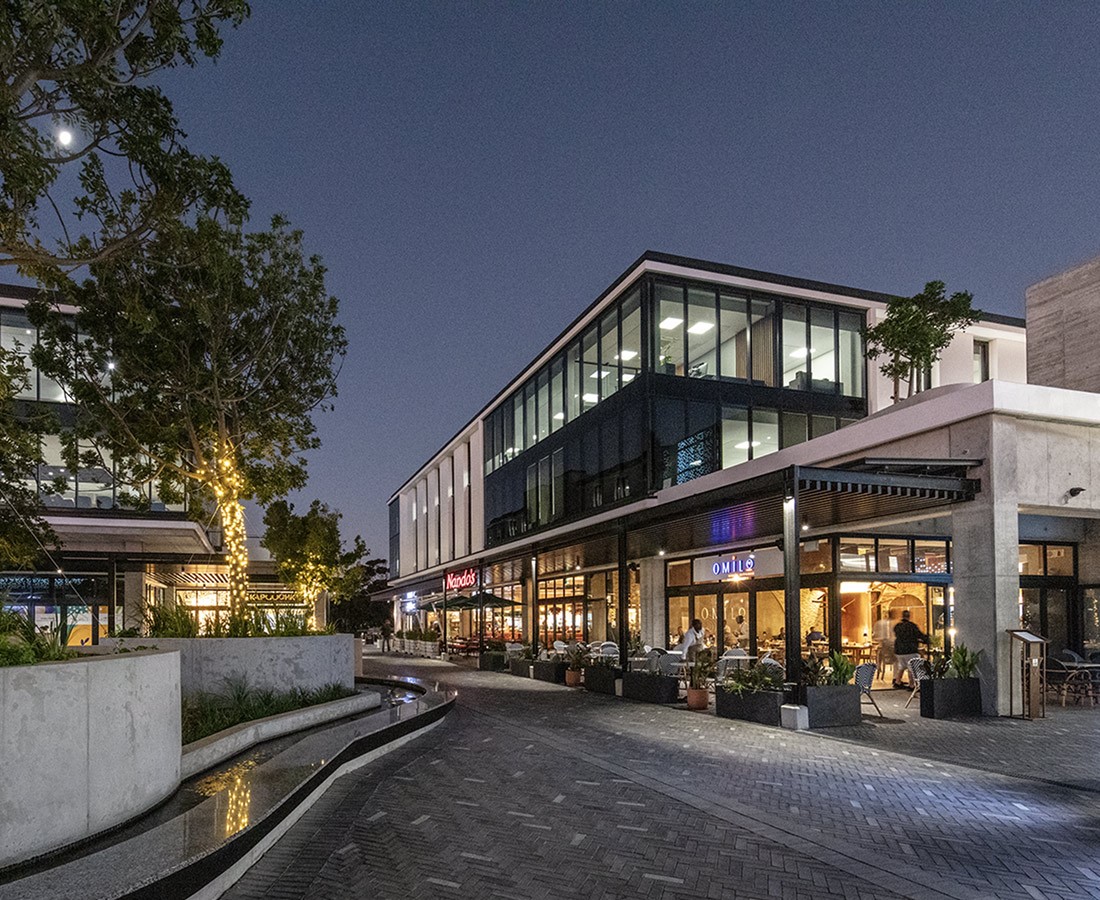
Riverlands Precinct: images courtesy of Riverlands Precinct
Precinct-Scale Projects as Platforms for Community Resilience
Precinct-scale urban development offers a unique opportunity: it’s small enough to be responsive, but large enough to influence systemic change.
In our experience with pilot Green Star Sustainable Precinct projects, including Riverlands and several others in the planning stages, we’ve seen that when community cohesion is intentionally designed for – from mobility networks to informal trading spaces – it strengthens long-term climate and economic resilience. These precincts are not just places to work or live. They become ecosystems of belonging.
S&J Business Park: images courtesy of S&J Business Park
At the same time, through our work on Green Star – New Build and Major Refurbishment Version 2 pilot projects, we’re supporting design teams to explore the new PLACES category, which encourages deeper engagement with cultural context, narrative, and site integration. It’s a promising shift toward ensuring that even building-scale developments contribute meaningfully to the broader urban fabric.
A resilient city is not simply one that can absorb shock. It’s one where people want to stay, contribute, and thrive, even in the face of uncertainty.
Equity and Adaptation Are Interlinked
In the African context, climate adaptation isn’t just about adding layers of technology. It’s about reclaiming design intelligence that works with, rather than against, the environment.
While cities in the global North may lean on high-tech solutions like mechanical cooling or smart grids, these approaches are often costly, energy-intensive, and not easily scalable across the realities of African development.
Here, adaptation must start with design – design that is climate-responsive, culturally rooted, and economically viable.
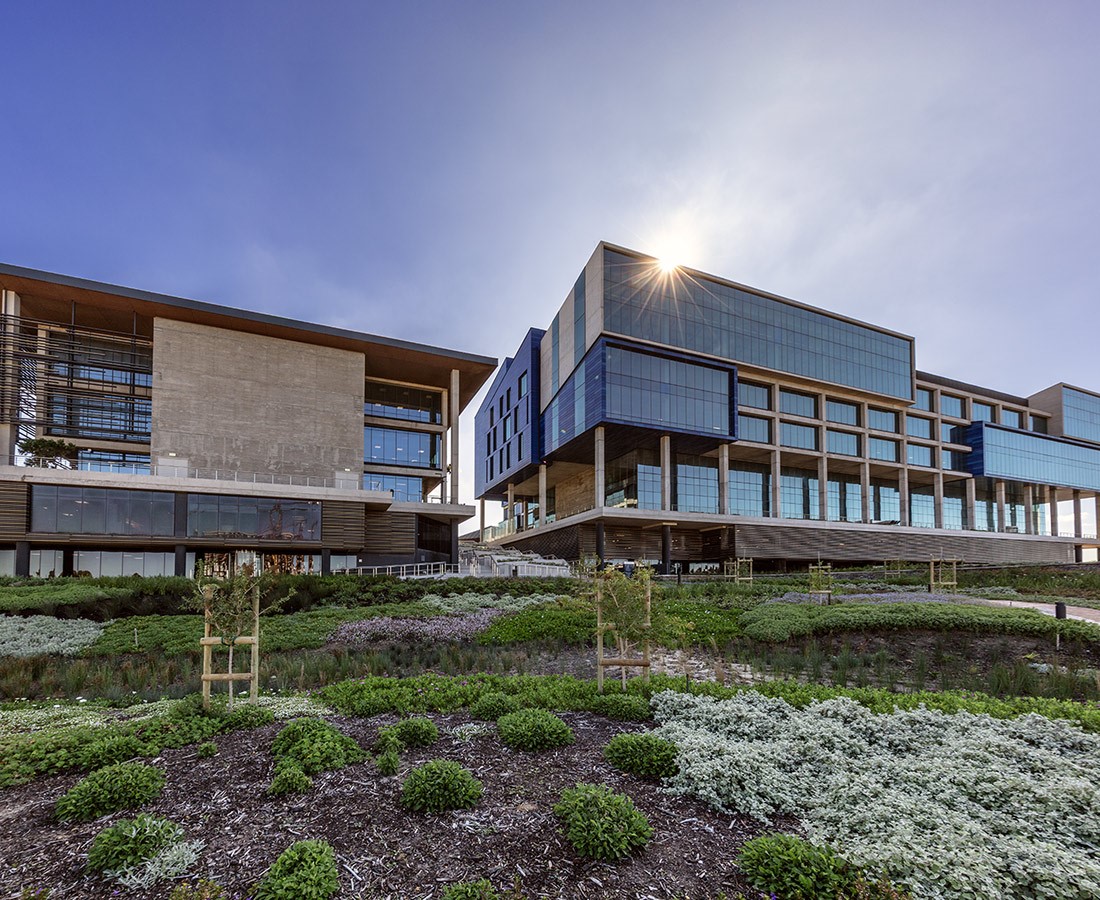
Riverlands Precinct: images courtesy of Riverlands Precinct
Vernacular architecture offers countless lessons: thick walls for thermal mass, shaded courtyards for air flow, orientation for passive cooling, materials that breathe. These aren’t outdated techniques. They’re future-proofing strategies that reduce energy demand while increasing occupant comfort.
Equity and adaptation intersect when we ask:
- Who gets to live or work in spaces that stay cool without driving up energy bills?
- Whose built environments are designed for their climate and culture, rather than imposed from external templates?
- Who benefits when resilience is designed in, rather than added on later at great cost?
When we prioritise equity in adaptation, we move from green buildings as technical achievements to buildings as lived experiences.
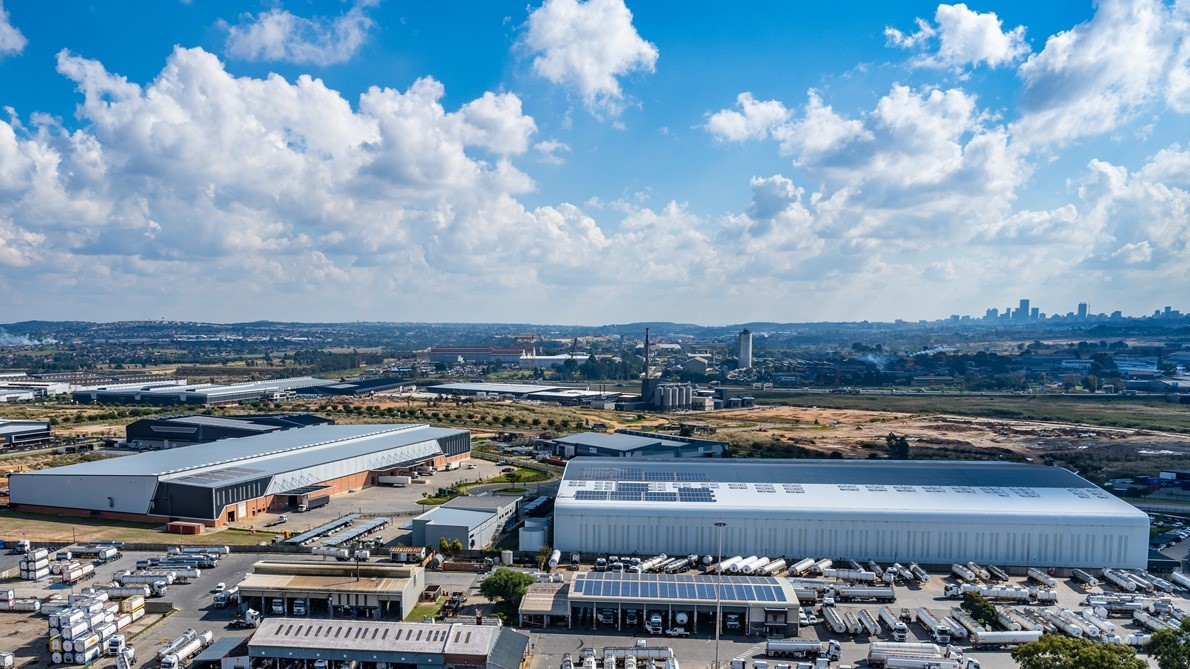
S&J Business Park: images courtesy of S&J Business Park
Looking Ahead
In the next article in this series, we’ll explore the tools we use to bring these principles to life – from Green Star Sustainable Precincts (SUP) to EcoDistricts and Just Communities. Localising approaches to the local context is essential, because the future of African cities isn’t about replicating models. It’s about creating systems and spaces that are resilient because they are relational, regenerative, and radically inclusive.

Riverlands Precinct: images courtesy of Riverlands Precinct

